Complete Guide to Choose a Commercial Bread Oven

Complete Guide to Choose a Commercial Bread Oven. To open a Bakery or Baking Shop. Choose the right oven for stable output and doubled efficiency; Choosing wrong can result in electricity, labor, and damage to the finished product. This article uses clear text and practical points to help you quickly select a commercial bread oven that is suitable for you.


First, let's understand: what are the types of commercial bread ovens?

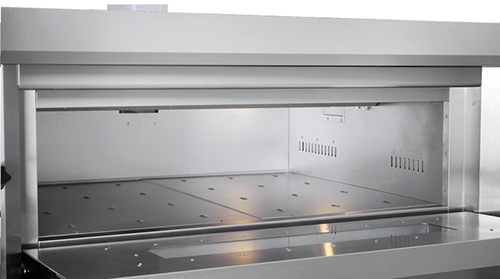
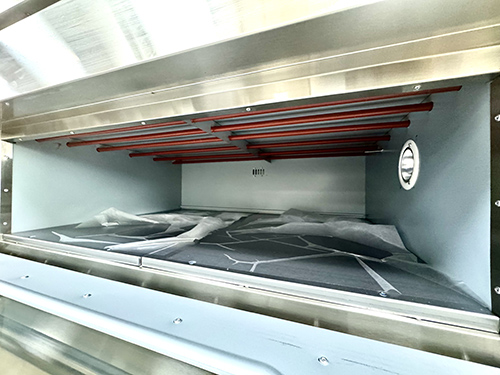
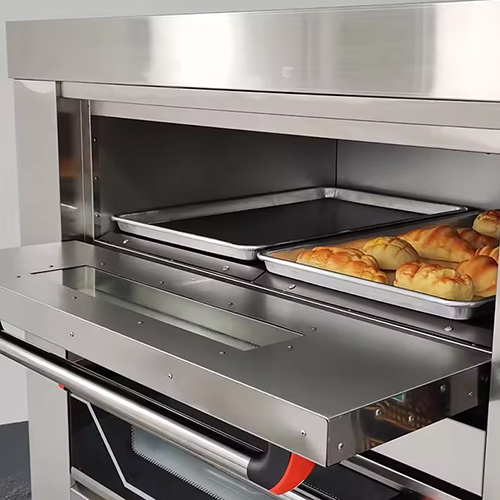
1. Deck Oven (iron and stone deck to choose) - preferred for European bread/baguettes.

Core features: each deck independent temperature control, stone slab heat storage.

Suitable products: European bread, baguettes, soup, pizza.

Advantages: crispy outer skin, beautiful cutting lines, and wheat fragrance.

Suitable for stores: specializing in artisan bread and boutique baking shops

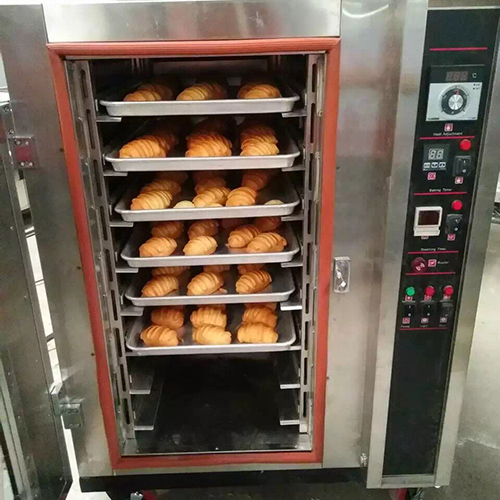
2. Hot air circulation oven (wind stove) - Mass production pastry/toast

Core features: strong hot air, multi-layer baking, uniform heating

Suitable for products: toast, meal buns, croissants, biscuits, puff pastry

Advantages: high efficiency, good consistency, suitable for mass production

Suitable for stores: walk-in bakeries, chain stalls


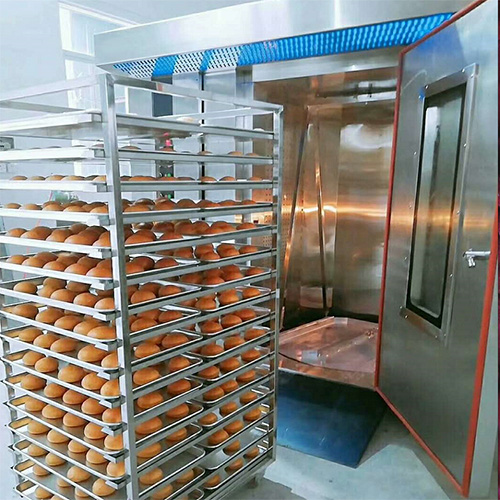
3. Rotating rack oven - Large factory/central kitchen

Core features: super large capacity, continuous baking Suitable for: daily production of thousands of pieces, factory production


Second: 5 core parameters must be considered when choosing:

1. Capacity and number of layers (choose according to production volume)

Small store: one deck two pans / two deck four pans

Medium store: three deck six pans / three deck nine pans

High yield store: three deck twelve pans/four deck sixteen pans

Suggestion: Reserve 20% margin to cope with peak season orders.


2. Energy type: Electricity vs Gas

Advantages of electric ovens: precise temperature control, simple installation, clean

requirements: mostly require 380V three-phase electricity.

Gas ovens advantages: fast heating, low long-term use cost.

Requirements: gas connection required. Approval for installation.

Suggestion: Small shops should prioritize electricity use; Large factories or big daily baking capacity shops are more choosing gas.


3. Temperature control accuracy (determines whether bread tastes good or not)

High quality commercial oven: temperature difference within ± 3 ℃

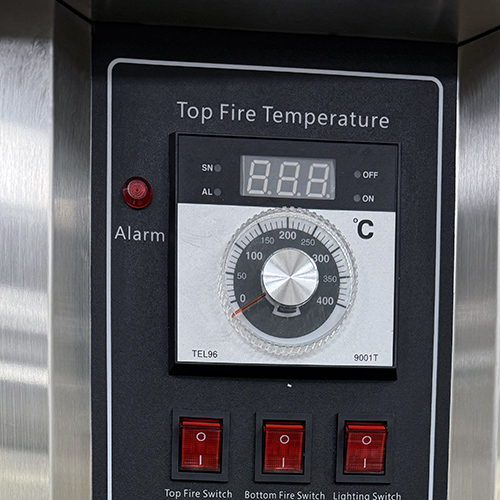
Must see function: independent temperature control (upper and lower fire/layered temperature control)

Timing function: easy to use


4. Material and workmanship

Inner liner: priority stainless steel, durable and easy to clean

Layers: thickened stone slab/cast iron, good heat storage

Door body: double-layer tempered glass, good insulation, anti scalding


5. Power and installation conditions

confirmed in advance: store voltage, power, air switch, ground wire, mismatched circuit will trip and burn the machine!


Safeguarding Drinking Water Understanding the Unseen Guest—Chlorate—and New Strategies for Comprehensive Control

Safeguarding Drinking Water: Understanding the Unseen Guest—Chlorate—and New Strategies for Comprehensive Control


In the ongoing mission to ensure drinking water safety, we battle not only natural microbial contaminants but also must be vigilant against unintended by-products formed during the disinfection process. Chlorate is one such by-product that has garnered significant attention. This blog will delve into what chlorate is and explore advanced technologies to control it at its source.


Chlorate: Why the Global Concern?

Chlorate is a compound formed when chlorine is in a highly oxidized state. It emerges as a potential disinfection by-product during water treatment and is facing increasingly strict scrutiny from regulators worldwide.


Research indicates that the health risks of chlorate cannot be ignored. It may:


Disrupt Thyroid Function: Inhibit the body's absorption of iodine (particularly in children and infants), affecting the normal synthesis of thyroid hormones.


Impact Blood Health: Potentially adversely affect the production of red blood cells.


Global Standards Vary, But the Consensus is Clear: Strict Control is Necessary

While the regulatory limits for chlorate in drinking water differ across the globe, reflecting local risk assessments and management strategies, the common trend is toward strict control:


World Health Organization (WHO) & China: 700 μg/L


U.S. Environmental Protection Agency (EPA): 210 μg/L (Health Reference Level)


European Commission: 250 μg/L


Canada: 1000 μg/L


Despite the varying standards, the message is unequivocal: the chlorate content in drinking water must be effectively managed.


Tracing the Source: Where Does Chlorate Come From?

While water disinfection is crucial for safety, chlorate is an "accidental byproduct" of this very process. Its primary source is the bulk storage of sodium hypochlorite disinfectant.


During storage, hypochlorite ions spontaneously degrade through the following reaction:

3ClO⁻ → ClO₃⁻ + 2Cl⁻


The rate of this process is heavily influenced by several factors:


Concentration: Higher initial concentrations of sodium hypochlorite lead to faster degradation.


Time: The longer the storage duration, the more chlorate is generated.


Temperature & Light: Elevated ambient temperatures and direct sunlight significantly accelerate the reaction.


pH Value: The acidity or alkalinity of the solution also affects the degradation kinetics.


The Solution: Shifting from Passive Storage to On-Site Generation

The traditional method of relying on purchased and stored sodium hypochlorite inevitably faces the issue of chlorate accumulation. Conventional measures to minimize its formation include reducing inventory turnover, storing at low temperatures in the dark, and procuring lower-concentration products. However, these methods often address the symptoms, not the root cause.


A more fundamental solution is adopting on-site electrolytic sodium hypochlorite generation technology. This method produces a low-concentration sodium hypochlorite solution on demand by electrolyzing salt water and immediately dosing it, thereby drastically reducing the storage  and suppressing chlorate formation at the source.


Comprehensive Advantages of On-Site Sodium Hypochlorite Generator:


Enhanced Safety: The on-site generated sodium hypochlorite is very dilute (approx. 0.8%), classifying it as a non-hazardous chemical, significantly reducing risks associated with transport, storage, and handling.


Significant Economic Benefits: The cost of self-generating sodium hypochlorite is often more advantageous than purchasing commercial bleach and helps avoid market price fluctuations.


Superior By-Product Control: The "generate-and-use-immediately" nature means hypochlorite has little time to degrade, resulting in exceptionally low chlorate levels.


Highly Reliable Supply Chain: The core raw materials are merely salt, water, and electricity, eliminating dependence on complex chemical supply chains and ensuring the autonomy and continuity of the plant's disinfection process.


Environmental Friendliness & Sustainability: Reduces carbon emissions associated with chemical transportation and generates almost no waste, representing a greener water treatment choice.


Technological Breakthrough: How Junchuan's Electrolysis System Achieves "Ultimate" Control?

While the electrolysis process itself can produce trace amounts of chlorate, technological advancements now enable precise control. Junchuan, leveraging its deep technical expertise, has made key breakthroughs in electrode coating and system process design, using a multi-pronged approach to minimize chlorate generation to the extreme:


Core Process Optimization: Increasing brine concentration, enhancing fluid velocity within the electrolyzer, and optimizing operating current to create an electrochemical environment unfavorable for chlorate formation.


Proprietary Electrode Coating: Utilizing a specially formulated electrode coating to suppress side reactions at their electrochemical root.


Intelligent Temperature Control: A unique split-flow cooling technology ensures the solution remains within the optimal temperature range throughout the generation process.


Scientific Concentration Management: Producing a sodium hypochlorite solution at an optimal concentration to ensure maximum stability during its short dosing cycle.


Thanks to these cutting-edge technologies, the Junchuan Electrolytic Chlorine Generation System can stably control chlorate generation to less than 100 micrograms per milligram of available chlorine. This exceptional performance not only easily complies with the world's most stringent current standards but also provides a solid technical reserve for meeting potentially stricter future regulatory requirements, setting a new benchmark for drinking water safety.


Dismantling methods and steps of guide idler wheel and final drive sprocket of excavator excavation

Dismantling methods and steps of guide idler wheel and final drive sprocket of excavator excavation


Disassembly is an indispensable task in excavator maintenance. It needs certain steps and methods to complete it. Otherwise, new faults will be added. Today we will talk about the disassembly methods of excavator guide idler wheel and final drive sprocket.


The disassembly steps of excavator front idler are as follows:


First remove the front idler wheel from the crawler rack, and then decompose the guide wheel.

Note: Before decomposition, the greasy oil inside should be released and the work should be careful. The floating seal ring with bearings on one side of the floating seal ring should be carefully removed, and then the shaft, sleeve and spring components should be disassembled one by one. The dismantled guide idler wheel and other parts should be inspected to see if there are pits, cracks and fracture defects. If the wear of the track tensioner idler exceeds the limit value, it should be repaired by surfacing. Check the dimensions of the shaft and bearing, check whether the track spring has cracks and fatigue defects, and whether it is broken. After finding out the problem, replace the new parts.


The assembly sequence is opposite to the disassembly sequence. When installing spring components, hydraulic jacks can be used as auxiliary equipment if necessary. The assembly of floating seal rings should pay enough attention. After assembly, the engine oil should be injected from greasy nozzles, and the amount of oil should be about 0.3L. After installation of guide wheels, the tension of track should be adjusted.


Excavator final drive sprocket steps:


When disassembling, the track shoe plate, cover plate, hydraulic hose, hydraulic motor components and so on are disassembled one by one. If necessary, lifting machine is used to assist the lifting and disassembly.


After the disassembly is completed, check whether the driving sprocket wheel has broken teeth, cracks, damage and wear, check whether the brake valve, hydraulic motor and gearbox are damaged.

Installation sequence is contrary to disassembly sequence. When assembling, attention must be paid to the installation status and direction of the original parts. All 0-rings must be replaced by new parts. When fastening bolts, the specified torque must be tightened.


Above is the way to disassemble track idler and drive sprocket of excavator. Disassembly is a detailed work. It needs patience to complete.

What are different types hydraulic cylinder on an excavator

An excavator typically consists of several hydraulic cylinders that enable the machine to perform various functions. Here are the different types of cylinders commonly found on an excavator:

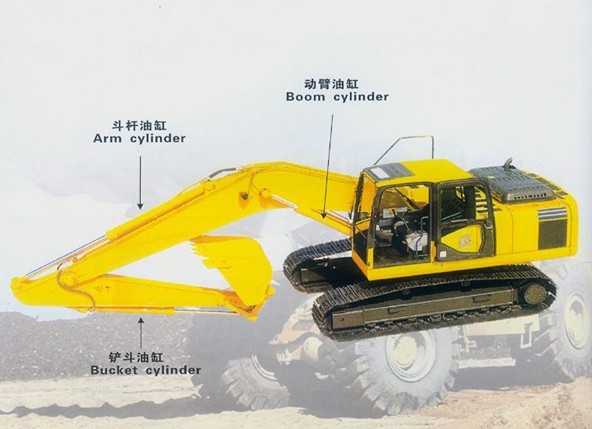
Boom Cylinder: The boom cylinder is connected to the boom and enables the vertical movement of the boom. It allows the excavator to raise and lower the boom for digging, lifting, and reaching different heights.

Arm Cylinder: The arm cylinder is attached to the arm or stick of the excavator. It controls the extension and retraction of the arm, allowing the excavator to reach forward and pull back during digging operations.

Bucket Cylinder: The bucket cylinder is responsible for operating the excavator's bucket. It controls the opening and closing of the bucket jaws or the tilt movement of the bucket. This cylinder allows the operator to dig, scoop, and release materials.

Swing Cylinder: The swing cylinder enables the rotation of the upper structure of the excavator. It allows the excavator to swing or rotate horizontally, typically up to 360 degrees, allowing the operator to position the machine in different directions without having to move the tracks.

Track or Travel Cylinder: Excavators equipped with crawler tracks have track cylinders that control the movement of the machine. These cylinders extend and retract to move the tracks, enabling the excavator to navigate across different terrains, change direction, and adjust its position.

These cylinders work in conjunction with the excavator's hydraulic system, which uses hydraulic fluid to transmit power and control the movements of the machine. By extending and retracting these cylinders, the excavator can perform a wide range of digging, lifting, swinging, and traveling actions, making it a versatile and powerful piece of equipment for construction and excavation projects.

china excavator hydraulic cylinder